
Skip to content
Think Crew Support

Think Crew Support

Answers to all of your questions

Account Management

3
  • Subscription Plans and Billing
  • Managing Your Subscription
  • Password Management

Collaboration Features

2
  • Team Collaboration Overview
  • Managing User Permissions

Devices & Internet

3
  • Using Think Crew on Mobile Devices
  • Running Think Crew from Your Desktop
  • Offline Access and Synchronization

Internationalization

4
  • Language Settings and Preferences
  • Available Languages and Translations
  • Setting Measurement Preferences
  • Date and Time Format Customization

Overview

14
  • Introduction to Think Crew
  • System Requirements and Browser Compatibility
  • Creating Your Account
  • Quick Start Guide
  • Navigating the Interface
  • Customizing Your User Profile
  • Your User Page
  • Search
  • Alerts
  • Understanding the Dashboard
  • Permissions Page
  • Keyboard Shortcuts and Time-saving Tips
  • Feature Requests
  • Report an Issue

Progress Reports

1
  • Progress Reports

Projects

6
  • Creating a New Project
  • Projects Page Overview
  • Managing Project Settings
  • Deleting Projects
  • Adding Users to Projects
  • Setting User Permissions

Schedule Page

44
  • Schedules Page Overview
  • Managing Panes (Tab Pane System)
  • Managing Schedule Scenarios
  • Creating and Managing Calendar Events
  • Printing Schedules
  • Schedule Settings
  • Boards
    • Board Views (Strips, Calendar)
    • Working with Boards
    • Recycle Bin
    • Drag and Drop Scheduling
    • Find & Replace
    • Sort & Add Days
    • Updating Multiple Breakdowns (Multi-Select)
  • Breakdowns
    • Breakdown Fundamentals
    • Creating Breakdown Sheets
    • Adding Data to a Breakdown
    • Linking Breakdowns to Scenes
    • Manually Setting a Strip’s Color
  • Categories & Elements
    • Category & Element Fundamentals
    • Managing Elements
    • Managing Categories
    • Working with the Elements Pane
  • Day Out of Days
    • Day Out of Days Overview
    • Where is the Day Out of Days
    • Day Out of Days Views (Grid, Calendar)
    • Selecting a Category and Board
    • Setting a Date Range
    • Day Out of Days Settings
    • Day Out of Days Filtering
    • Managing Totals Columns
    • Solo Elements
    • Show Only Working Elements
    • Changing the Schedule in the Day Out of Days (Moving Columns)
  • Designs
    • Designs Overview
    • Creating a Design
    • Creating a Strip
    • Design a Strip
    • Design Strip Menu Bar – Table
    • Design Strip Menu Bar – Categories
    • Design Strip Menu Bar – Field
    • Design Strip Menu Bar – Format
    • Strip Preview
    • Creating a Palette
    • Sharing Designs, Strips & Palettes

Schedules

6
  • Create a Schedule
  • Duplicating Schedules
  • Import & Export Schedules
  • Moving a Schedule to Another Project
  • Deleting Schedules
  • Revising Scripts

Script Page

5
  • Script Editor Basics
  • Working with Scenes
  • Script Views (Scene, Breakdown, Script)
  • Managing Scene Breakdowns
  • Renumbering Scenes

Scripts

7
  • Importing Scripts
  • Managing a Script
  • Moving a Script to Another Project
  • Scripts Page Overview
  • Deleting Scripts
  • Automatic Scene Descriptions
  • How to Import Scripts from Scriptation

Site Info

3
  • Change Log
  • AI Scene Descriptions: Data Security and Privacy
  • Think Crew Security Overview

Troubleshooting

4
  • Common Issues and Solutions
  • Contacting Support
  • System Status and Maintenance Information
  • How to Hard-Reload Think Crew
View Categories
  • Home
  • Docs
  • Script Page
  • Working with Scenes

Working with Scenes

1 min read

In Think Crew, scenes are the building blocks of your script and production schedule. Understanding how to navigate, manage, and edit scenes is essential for efficient script breakdown and scheduling.

Scene Structure #

When a script is imported, Think Crew automatically identifies and structures scenes with these key components:

  • Scene Number: Appears in the margins and is used for reference throughout production
  • Scene Heading: Contains location information (INT/EXT), setting, and time of day
  • Scene Content: The action, dialogue, and other elements that make up the scene
  • Scene Metadata: Automatically extracted data like INT/EXT status, day/night, and location

Navigating Between Scenes #

Think Crew offers multiple ways to move between scenes:

  • Use the scene slider in the navigation bar to quickly scroll through scenes
  • Enter a scene number in the navigation field to jump directly to that scene
  • Switch to “Script” view to see thumbnail previews of all scenes and click on any to open it
  • Use the dropdown menu in the breakdown panel to select scenes by heading content

Scene Actions #

You can perform several actions with scenes in Think Crew:

  • Viewing: Examine scene content in formatted screenplay style
  • Editing: Modify scene content while maintaining proper script formatting
  • Tagging: Identify and mark elements within scenes for breakdown purposes
  • Marking as OMIT: Flag scenes that should be skipped in production
  • Page Counting: View automatic calculation of how many script pages a scene occupies

Scene management in Think Crew bridges the gap between your creative screenplay and your practical production planning, giving you flexibility while maintaining the organizational structure needed for efficient scheduling.

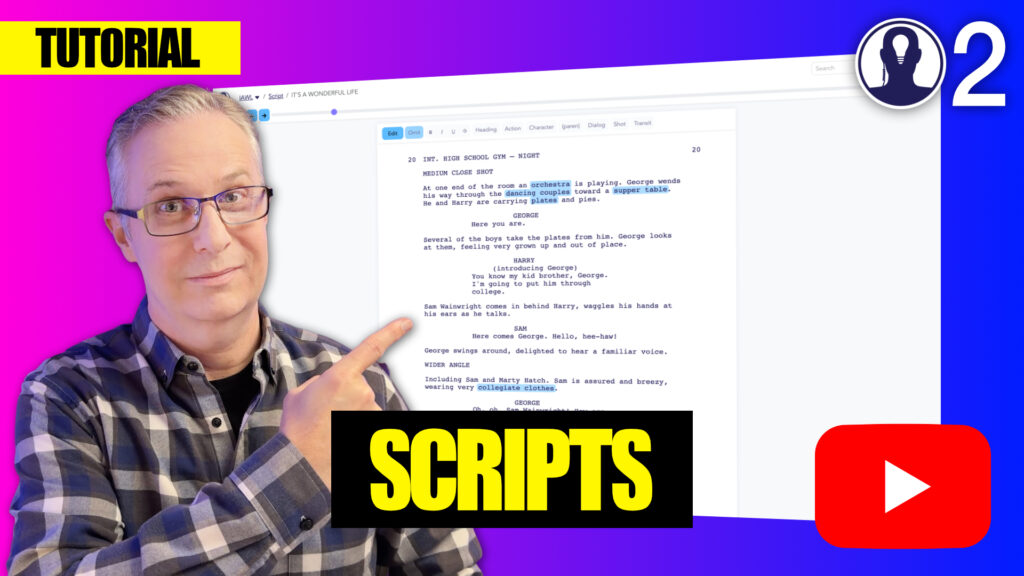
Here’s a tutorial video about working with scripts:
Updated on April 22, 2025
ProductionPlanning

What are your Feelings

  • Happy
  • Normal
  • Sad

Share This Article :

  • Facebook
  • X
  • LinkedIn
  • Pinterest
Script Editor BasicsScript Views (Scene, Breakdown, Script)

Leave a Reply Cancel reply

Your email address will not be published. Required fields are marked *

Table of Contents
  • Scene Structure
  • Navigating Between Scenes
  • Scene Actions
  • Facebook
  • YouTube
  • Instagram
  • Bluesky
Proudly powered by WordPress