
Skip to content
Think Crew Support

Think Crew Support

Answers to all of your questions

Account Management

3
  • Subscription Plans and Billing
  • Managing Your Subscription
  • Password Management

Collaboration Features

2
  • Team Collaboration Overview
  • Managing User Permissions

Devices & Internet

3
  • Using Think Crew on Mobile Devices
  • Running Think Crew from Your Desktop
  • Offline Access and Synchronization

Internationalization

4
  • Language Settings and Preferences
  • Available Languages and Translations
  • Setting Measurement Preferences
  • Date and Time Format Customization

Overview

14
  • Introduction to Think Crew
  • System Requirements and Browser Compatibility
  • Creating Your Account
  • Quick Start Guide
  • Navigating the Interface
  • Customizing Your User Profile
  • Your User Page
  • Search
  • Alerts
  • Understanding the Dashboard
  • Permissions Page
  • Keyboard Shortcuts and Time-saving Tips
  • Feature Requests
  • Report an Issue

Progress Reports

1
  • Progress Reports

Projects

6
  • Creating a New Project
  • Projects Page Overview
  • Managing Project Settings
  • Deleting Projects
  • Adding Users to Projects
  • Setting User Permissions

Schedule Page

44
  • Schedules Page Overview
  • Managing Panes (Tab Pane System)
  • Managing Schedule Scenarios
  • Creating and Managing Calendar Events
  • Printing Schedules
  • Schedule Settings
  • Boards
    • Board Views (Strips, Calendar)
    • Working with Boards
    • Recycle Bin
    • Drag and Drop Scheduling
    • Find & Replace
    • Sort & Add Days
    • Updating Multiple Breakdowns (Multi-Select)
  • Breakdowns
    • Breakdown Fundamentals
    • Creating Breakdown Sheets
    • Adding Data to a Breakdown
    • Linking Breakdowns to Scenes
    • Manually Setting a Strip’s Color
  • Categories & Elements
    • Category & Element Fundamentals
    • Managing Elements
    • Managing Categories
    • Working with the Elements Pane
  • Day Out of Days
    • Day Out of Days Overview
    • Where is the Day Out of Days
    • Day Out of Days Views (Grid, Calendar)
    • Selecting a Category and Board
    • Setting a Date Range
    • Day Out of Days Settings
    • Day Out of Days Filtering
    • Managing Totals Columns
    • Solo Elements
    • Show Only Working Elements
    • Changing the Schedule in the Day Out of Days (Moving Columns)
  • Designs
    • Designs Overview
    • Creating a Design
    • Creating a Strip
    • Design a Strip
    • Design Strip Menu Bar – Table
    • Design Strip Menu Bar – Categories
    • Design Strip Menu Bar – Field
    • Design Strip Menu Bar – Format
    • Strip Preview
    • Creating a Palette
    • Sharing Designs, Strips & Palettes

Schedules

6
  • Create a Schedule
  • Duplicating Schedules
  • Import & Export Schedules
  • Moving a Schedule to Another Project
  • Deleting Schedules
  • Revising Scripts

Script Page

5
  • Script Editor Basics
  • Working with Scenes
  • Script Views (Scene, Breakdown, Script)
  • Managing Scene Breakdowns
  • Renumbering Scenes

Scripts

7
  • Importing Scripts
  • Managing a Script
  • Moving a Script to Another Project
  • Scripts Page Overview
  • Deleting Scripts
  • Automatic Scene Descriptions
  • How to Import Scripts from Scriptation

Site Info

3
  • Change Log
  • AI Scene Descriptions: Data Security and Privacy
  • Think Crew Security Overview

Troubleshooting

4
  • Common Issues and Solutions
  • Contacting Support
  • System Status and Maintenance Information
  • How to Hard-Reload Think Crew
View Categories
  • Home
  • Docs
  • Schedule Page
  • Day Out of Days
  • Solo Elements

Solo Elements

2 min read

The Solo Elements feature in Think Crew’s Day Out of Days report allows you to focus on specific elements temporarily while hiding all others. This powerful function helps you analyze individual schedules more effectively without modifying your filters or overall report settings.

Using Solo Mode #

To activate Solo mode for one or more elements:

  1. Open the Day Out of Days pane with your desired category and board
  2. Find the element you want to focus on in the elements list
  3. Click the checkbox next to any elements you wish to solo
  4. Look for the “Solo” icon in the element header (eye icon)
  5. Click the Solo icon to activate Solo mode for those elements

When Solo mode is active, only the selected elements will be displayed in your report, with all others temporarily hidden.

Exiting Solo Mode #

To exit Solo mode and return to viewing all elements:

  • Click the Solo icon again for the soloed element(s)

Common Use Cases #

Solo mode is particularly useful in these scenarios:

  • Actor Schedule Review: When discussing an actor’s schedule, solo their element to focus the conversation
  • Elements that are Far Apart: Sometimes you need to concentrate on elements that are visually far apart on the dood. Soloing them allows you to see them together.
  • Schedule Comparisons: Solo multiple elements to compare their working patterns
  • Conflict Resolution: Solo elements that have scheduling conflicts to analyze and resolve issues
  • Pattern Analysis: Solo a key element to better visualize their work patterns across the schedule
  • Presentations: Solo elements when presenting schedules to stakeholders to reduce visual clutter

Solo Mode Tips #

  • Solo mode is temporary and doesn’t affect your saved filters or view settings
  • You can still adjust date ranges and view options while in Solo mode
  • Solo mode works in both Grid and Calendar views
  • Export while in Solo mode to create element-specific reports

The Solo Elements feature provides a quick way to focus on specific elements without disrupting your overall Day Out of Days configuration.

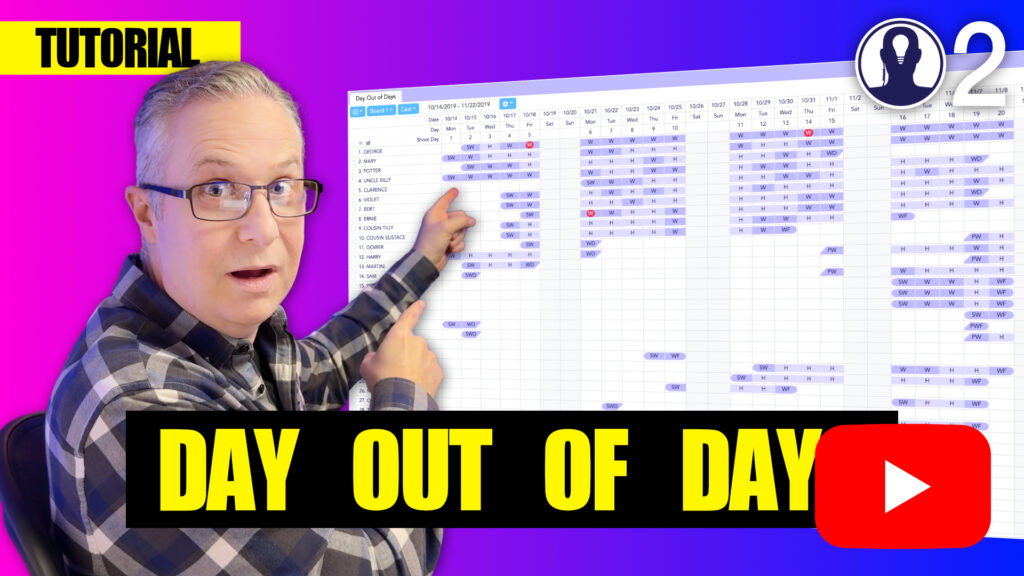
Here’s a tutorial video that covers everything about the day out of days:
Updated on April 23, 2025
ActorSchedule

What are your Feelings

  • Happy
  • Normal
  • Sad

Share This Article :

  • Facebook
  • X
  • LinkedIn
  • Pinterest
Managing Totals ColumnsShow Only Working Elements

Leave a Reply Cancel reply

Your email address will not be published. Required fields are marked *

Table of Contents
  • Using Solo Mode
  • Exiting Solo Mode
  • Common Use Cases
  • Solo Mode Tips
  • Facebook
  • YouTube
  • Instagram
  • Bluesky
Proudly powered by WordPress